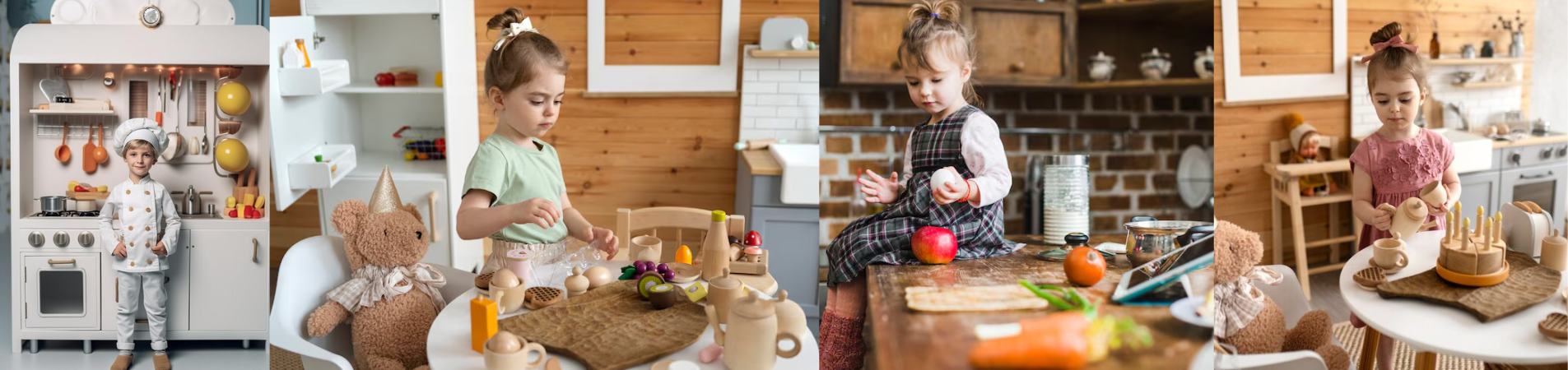
As parents, we all want toys that do more than simply entertain our children for a few days before ending up forgotten in a corner. The most valuable toys inspire imagination, encourage problem-solving, and adapt to a child's changing interests over time. These are known as open-ended toys.
Unlike traditional toys that have a single purpose or fixed way to play, open-ended toys allow children to invent their own games, stories, and adventures. They become chefs, explorers, builders, teachers, campers, veterinarians, or astronauts—all using the same toy in completely different ways.
Whether you're creating a Montessori-inspired playroom or simply looking for toys that provide lasting value, open-ended play equipment is an investment in your child's creativity and development.
In this guide, we'll explore what makes open-ended toys so beneficial, why they support every stage of childhood, and how a mud kitchen, kids teepee, and play tunnel can become the foundation of countless imaginative adventures.
What Are Open-Ended Toys?
Open-ended toys are play materials that don't have predetermined rules or a single "correct" way to use them.
Instead of telling children exactly what to do, these toys encourage them to decide:
- What they're playing
- How they'll use the toy
- Who they'll become during play
- How the story unfolds
One day a child might use a play tunnel as a secret cave. The next day, it becomes a train tunnel, a dragon's lair, or part of an obstacle course.
Similarly, a teepee might transform from a reading nook into a pirate ship, space station, doctor's office, or magical castle.
Because children control the experience, every play session feels fresh and exciting.
Why Open-Ended Play Matters
Open-ended play is much more than entertainment. It plays an important role in healthy childhood development.
Instead of following instructions, children learn to think independently, solve problems creatively, and express themselves confidently.
Some of the biggest developmental benefits include:
- Stronger imagination
- Better communication skills
- Increased independence
- Improved concentration
- Emotional development
- Enhanced creativity
- Better cooperation with siblings and friends
- Greater confidence in decision-making
These skills continue to benefit children throughout school and later in life.
Open-Ended Toys Grow With Your Child
One of the biggest advantages of open-ended toys is their longevity.
Many electronic toys become too simple as children grow older. Others lose their appeal once children have explored all their features.
Open-ended toys evolve alongside your child's imagination.
A toddler might crawl through a play tunnel simply because it's fun.
A preschooler may use the same tunnel during pretend adventures.
An older child might include it in elaborate obstacle courses or imaginative missions with friends.
The toy changes because the child's imagination changes.
This makes open-ended toys an excellent long-term investment for families.
Characteristics of Great Open-Ended Toys
Not every toy qualifies as open-ended.
The best ones share several qualities.
They Encourage Imagination
Rather than providing all the answers, they invite children to invent their own stories.
They Can Be Used in Multiple Ways
One toy supports dozens—or even hundreds—of different activities.
They Work Across Different Ages
Children continue finding new ways to enjoy them as they mature.
They Promote Independent Play
Kids don't need constant adult guidance.
Instead, they become the creators of their own experiences.
They Support Social Play
Open-ended toys encourage teamwork, communication, sharing, and collaborative storytelling.
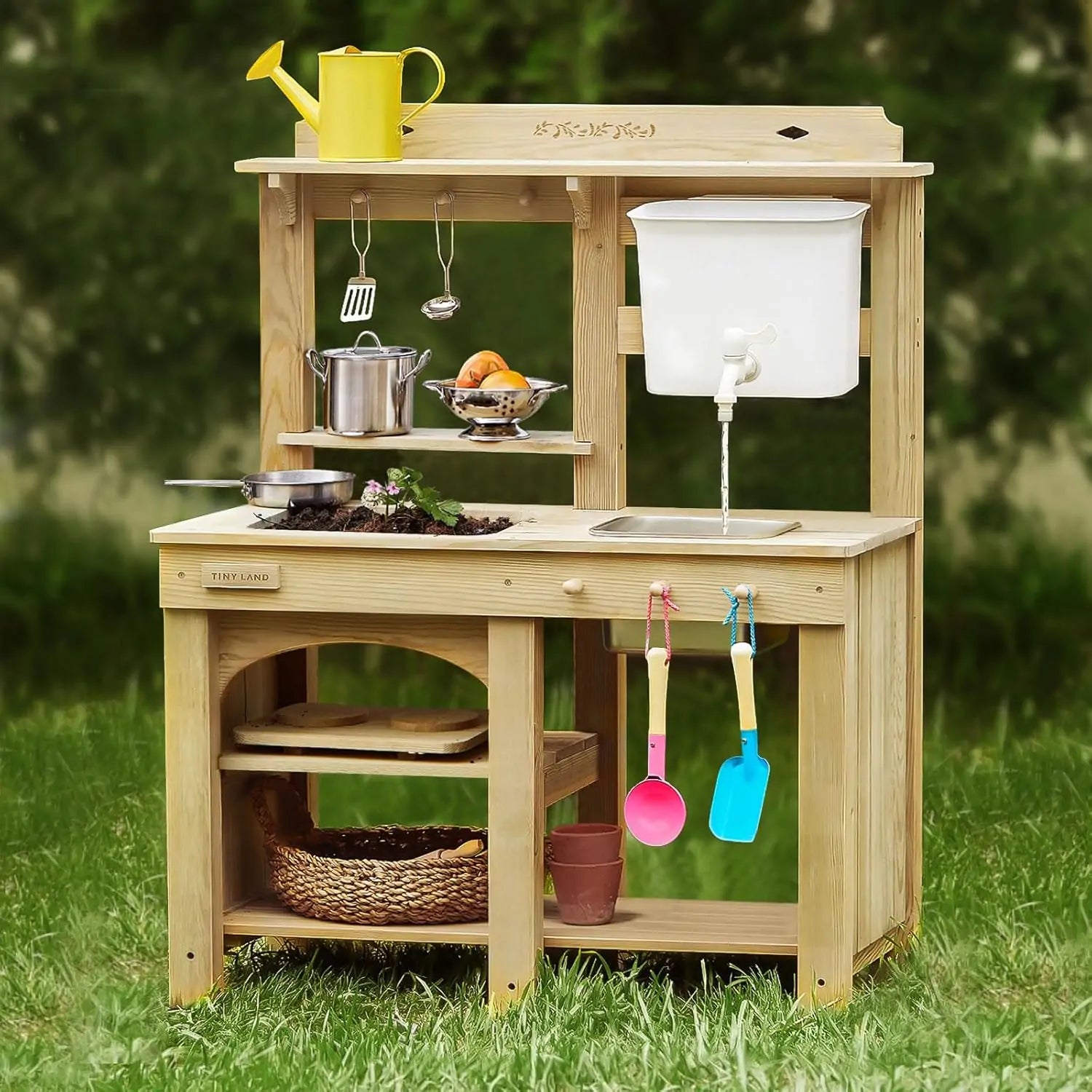
Mud Kitchens: Endless Creative Adventures
One of the most versatile examples of open-ended play is a mud kitchen.
Unlike toy kitchens with plastic food and preset accessories, a mud kitchen encourages children to use natural materials they discover outdoors.
Leaves become lettuce.
Flowers become decorations.
Pebbles become cookies.
Mud becomes soup.
Water becomes tea.
Every recipe exists only in the child's imagination.
Because no two outdoor experiences are alike, every cooking session feels different.
Buy Now
Skills Children Develop Through Mud Kitchen Play
Pretend cooking encourages:
- Creative thinking
- Fine motor skills
- Sensory exploration
- Scientific observation
- Problem-solving
- Early math concepts
- Social interaction
Children naturally measure, pour, mix, compare, and experiment without realizing they're learning valuable skills.
Buy Now
A Mud Kitchen Supports Outdoor Learning
Outdoor play introduces children to textures, weather, plants, insects, and natural materials.
Instead of simply observing nature, children interact with it.
A mud kitchen creates opportunities for:
- Nature exploration
- Gardening activities
- Water play
- Sensory discovery
- Pretend cafés
- Outdoor restaurants
- Bakery games
- Potion making
- Science experiments
Every season offers new materials to discover, making the experience feel fresh all year long.

Buy Now
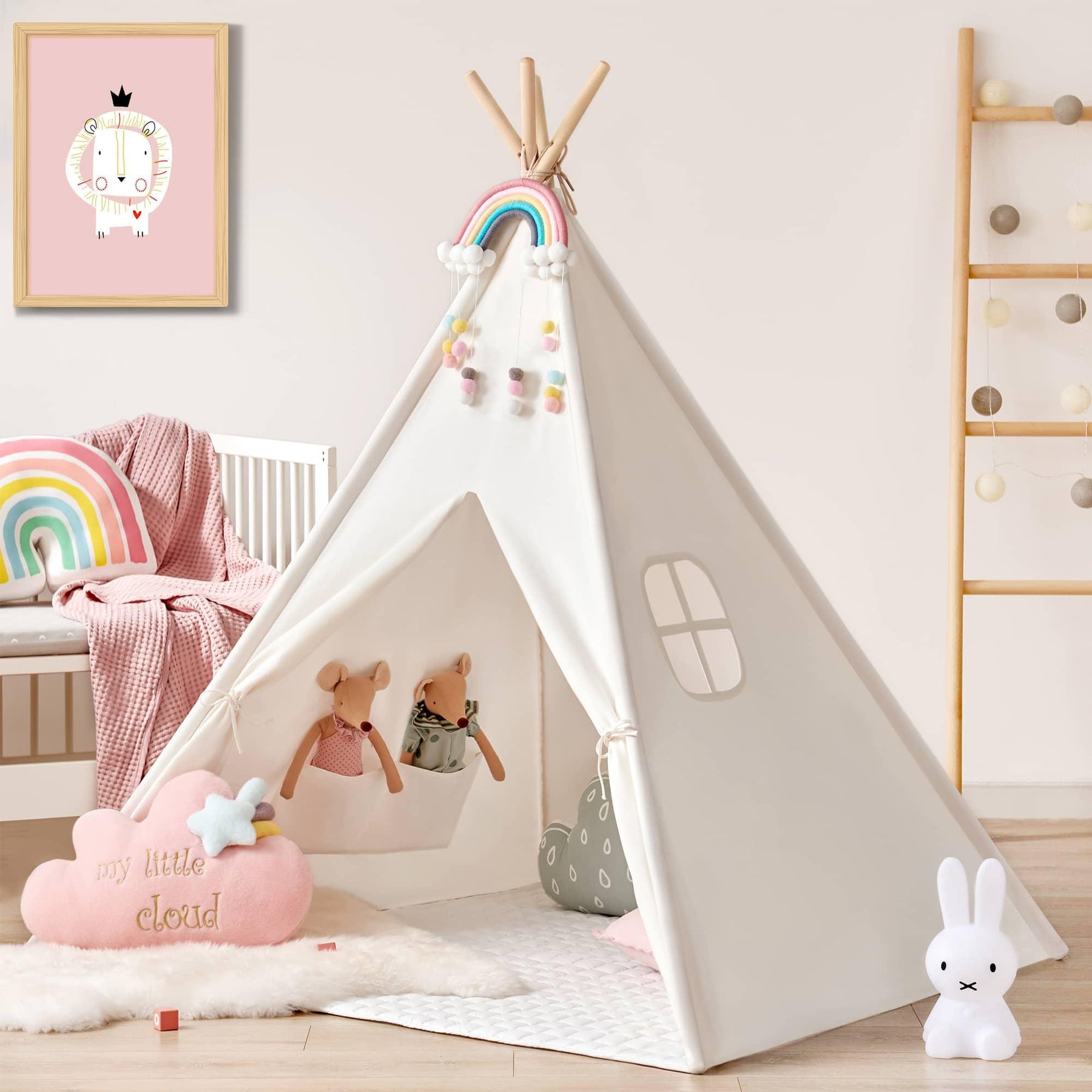
Kids Teepees Create Imagination Stations
While outdoor adventures stimulate active exploration, children also benefit from having a quiet place where imagination can flourish.
A kids teepee provides exactly that.
Rather than serving one specific purpose, it becomes whatever a child imagines.
Today it's a castle.
Tomorrow it's a jungle camp.
Next week it's a veterinarian clinic.
Later it's a reading fort.
The possibilities never end.
Unlike themed playhouses, a simple teepee allows children to create the story themselves.
That freedom is what makes it an exceptional open-ended toy.
How a Teepee Encourages Independent Play
Children naturally seek spaces that feel like their own. A teepee provides a cozy retreat where they can play independently, read quietly, or invent imaginative stories without constant direction from adults.
Some popular ways children use a teepee include:
- Reading their favorite books
- Hosting stuffed animal tea parties
- Pretending to camp indoors
- Playing school or library
- Building imaginary kingdoms
- Creating puppet shows
- Relaxing during quiet time
- Playing house with siblings
Because the environment is open to interpretation, every visit inside the teepee can become a completely new adventure.
Play Tunnels Keep Kids Moving
Open-ended play isn't only about imagination—it also includes movement.
A play tunnel transforms ordinary play into exciting physical adventures while encouraging gross motor development.
Young children love crawling, climbing, hiding, and exploring spaces that feel adventurous. A play tunnel provides all of these opportunities while remaining simple enough to become part of almost any game.
Unlike electronic toys that encourage sitting still, a play tunnel keeps children active.
Developmental Benefits of Play Tunnels
Active play helps children build important physical skills that support everyday activities.
Playing with a tunnel encourages:
- Balance
- Coordination
- Core strength
- Spatial awareness
- Agility
- Confidence
- Body control
- Gross motor development
Children also develop problem-solving skills as they invent obstacle courses, treasure hunts, and rescue missions that require planning and teamwork.
Creative Ways Children Use a Play Tunnel
One of the reasons a play tunnel remains interesting year after year is its versatility.
Depending on the game, it can become:
- A secret cave
- A race course
- A train tunnel
- A jungle path
- A mountain tunnel
- A rocket launch tube
- A rescue mission passage
- A dinosaur cave
- A magical portal
- A pirate escape route
Since children continually invent new stories, the tunnel never feels repetitive.
Why These Three Toys Work So Well Together
While each toy offers countless play opportunities on its own, combining them creates an even richer play environment.
Imagine a typical afternoon of imaginative play.
The mud kitchen becomes a busy outdoor café where children prepare delicious pretend meals using sticks, flowers, leaves, and mud.
Customers crawl through the play tunnel, which serves as the entrance to the café or a secret passage leading to an enchanted forest.
After serving their guests, everyone gathers inside the teepee for a picnic, storytelling session, or quiet rest before beginning another adventure.
Without realizing it, children are practicing communication, cooperation, planning, creativity, and physical movement all within a single play experience.
These toys naturally complement one another because each supports a different aspect of childhood development.
Open-Ended Toys Support Montessori Principles
Many parents interested in Montessori education choose open-ended toys because they encourage child-led learning.
Instead of directing every activity, adults provide an environment filled with opportunities for exploration.
Children then choose how they want to engage with those materials.
A mud kitchen allows children to experiment independently with natural elements.
A teepee offers a peaceful space for reading, quiet reflection, and imaginative thinking.
A play tunnel supports self-directed physical exploration while building confidence through movement.
These experiences help children become active learners rather than passive observers.
Encouraging Social Skills Through Open-Ended Play
Open-ended toys also create wonderful opportunities for cooperative play.
When children play together, they naturally negotiate roles, solve disagreements, and work toward shared goals.
For example:
One child may become the chef.
Another becomes the customer.
Someone else delivers meals through the play tunnel.
Another decorates the teepee for a pretend birthday celebration.
Without adult instruction, children learn to communicate ideas, compromise, share resources, and develop empathy.
These social experiences prepare children for school, friendships, and collaborative learning.
Tips for Choosing Open-Ended Toys
When shopping for toys that will grow with your child, keep these factors in mind.
Choose Versatility Over Complexity
Simple toys often inspire the most creative play because children supply the imagination.
Look for Long-Term Value
Select toys that remain interesting across different ages rather than those children quickly outgrow.
Encourage Both Indoor and Outdoor Play
A balanced play environment includes opportunities for active movement, quiet reflection, sensory exploration, and imaginative storytelling.
Prioritize Quality
Well-made toys withstand years of daily use and can often be enjoyed by younger siblings as well.
Leave Room for Creativity
Avoid toys that dictate every step of play. The less structured the toy, the more opportunities children have to invent their own experiences.
Creating an Open-Ended Play Space at Home
You don't need a large playroom to encourage imaginative play.
Even a small corner can become a creative environment by combining a few versatile pieces.
For example:
- Place a teepee in a quiet corner with books, cushions, and stuffed animals.
- Set up a mud kitchen in the backyard with buckets, pots, and natural materials.
- Keep a play tunnel nearby so children can connect indoor and outdoor adventures.
Rotate loose parts such as pinecones, leaves, wooden spoons, fabric pieces, cardboard boxes, or toy animals to introduce fresh ideas without buying new toys.
This simple approach keeps play exciting while encouraging children to use their imagination instead of relying on constant entertainment.
Why Parents Love Open-Ended Toys
Parents often notice that open-ended toys hold their children's attention longer than highly structured toys.
Instead of asking, "What does this toy do?" children begin asking, "What can I do with this?"
That shift encourages curiosity, independence, and creativity.
Open-ended toys also reduce screen time by giving children meaningful alternatives that stimulate both their minds and bodies.
Because these toys adapt to changing interests and developmental stages, families often enjoy years of use from a single purchase.
Conclusion
Open-ended toys are among the most valuable investments parents can make in their child's development. Rather than offering a single activity or predetermined outcome, they encourage children to think creatively, solve problems, communicate with others, and explore the world through their own ideas.
A mud kitchen inspires sensory discovery and imaginative outdoor cooking. A kids teepee provides a cozy retreat for reading, storytelling, and pretend adventures. A play tunnel promotes active movement while becoming everything from a secret cave to a magical passage.
Together, these three versatile toys create a play environment that grows alongside your child, supporting physical, emotional, social, and cognitive development at every stage.
When children are given the freedom to imagine, create, and explore without limits, play becomes more than entertainment—it becomes one of the most powerful ways they learn about themselves and the world around them. Choosing open-ended toys is an investment not only in hours of joyful play but also in the confidence, curiosity, and creativity that will benefit your child for years to come.