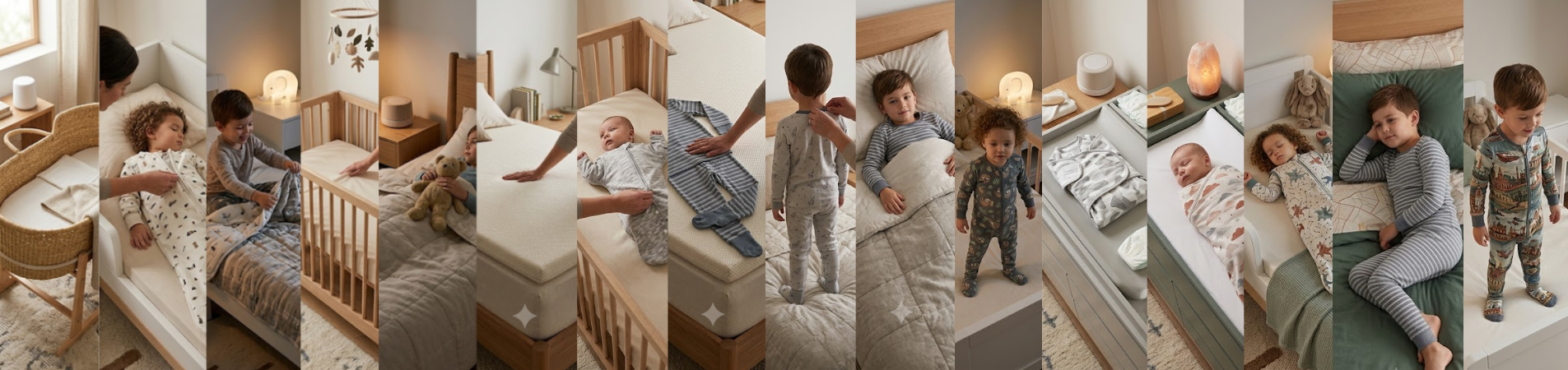
Sleep is one of the most important building blocks of a child's healthy development. From supporting brain growth to improving mood, immunity, and physical development, quality sleep affects nearly every aspect of your little one's well-being. However, as children grow from babies into active toddlers and eventually preschoolers, their sleep needs change significantly.
Many parents find themselves wondering whether their child has outgrown their current sleepwear or if it's time to transition to something more suitable. Choosing the right baby sleep solutions for each developmental stage can help create a consistent bedtime routine while ensuring your child remains comfortable throughout the night.
This guide walks you through every stage of your child's sleep journey, explaining how sleep patterns evolve and how different wearable sleep products—including a weighted sleep sack, weighted sleep suit, and weighted sleep vest—can support your growing child.
Why Sleep Needs Change as Children Grow
A newborn sleeps very differently from a toddler, and a preschooler has entirely different bedtime habits than both. As children reach developmental milestones, their sleep routines naturally evolve.
Several factors influence these changes:
- Increased mobility
- Brain development
- Growing independence
- Language development
- Emotional regulation
- Daily activity levels
Understanding these transitions helps parents choose sleep solutions that match their child's age, abilities, and bedtime needs.
Understanding Baby Sleep Solutions
Baby sleep solutions are products and routines designed to encourage safe, comfortable, and consistent sleep. They include healthy bedtime habits, calming environments, appropriate room temperatures, and wearable sleep products that replace loose blankets.
Instead of relying on multiple blankets that can be kicked off during the night, wearable sleep products help maintain consistent warmth while allowing children to move safely.
The right sleep solution depends on your child's age, developmental stage, and sleeping habits.
Stage One: Babies (6–18 Months)
Between six and eighteen months, babies experience tremendous growth. They learn to roll, crawl, sit, pull themselves up, and eventually begin walking.
Their sleep patterns also become more structured, often including:
- Two daytime naps
- Longer nighttime sleep
- More predictable bedtime routines
Although babies become more active, they still need a secure, cozy sleeping environment.

Buy Now
Common Sleep Challenges During This Stage
Parents often notice:
- Night wakings
- Teething discomfort
- Separation anxiety
- Sleep regressions
- Increased movement during sleep
These changes are completely normal but can temporarily disrupt sleep.
Why a Weighted Sleep Sack Is Ideal for Babies
A weighted sleep sack is designed specifically for babies who have outgrown traditional swaddling but still benefit from wearable sleepwear.
Unlike loose blankets, a sleep sack stays in place throughout the night while allowing natural leg movement.
Benefits include:
- Comfortable warmth
- Consistent sleep environment
- Freedom of movement
- No loose bedding
- Easy bedtime routine
A weighted sleep sack can become a familiar part of bedtime, helping babies recognize that it's time to sleep.
Creating a Bedtime Routine for Babies
Consistency is more important than perfection.
A calming evening routine may include:
- Warm bath
- Gentle massage
- Quiet play
- Storytime
- Feeding
- Putting on the weighted sleep sack
- White noise
- Lights out
Repeating the same sequence each night helps babies understand what comes next.
Signs It's Time to Transition
Every child develops differently, but parents often notice changes around the second year.
Your baby may:
- Walk confidently
- Climb furniture
- Become more independent
- Resist diaper changes
- Want greater freedom of movement
These milestones often indicate that it's time to consider the next stage of wearable sleepwear.
Stage Two: Active Toddlers
Toddlers are constantly exploring the world.
Walking quickly turns into running, climbing, jumping, and endless curiosity.
Although they have more energy than ever before, they still require approximately 11–14 hours of sleep each day, including naps.
Unfortunately, this stage often introduces new bedtime challenges.
Common Toddler Sleep Challenges
Many parents experience:
- Bedtime resistance
- Increased independence
- Nighttime wandering
- Fear of missing out
- Sleep regressions
- Difficulty settling after exciting days
Toddlers often appear tired but still resist bedtime because they don't want the day to end.

Buy Now
Why a Weighted Sleep Suit Works Well for Toddlers
A weighted sleep suit is designed for active toddlers who need greater mobility than a sleep sack offers.
Unlike traditional sleepwear, a sleep suit includes separate legs, allowing children to walk safely before bedtime while remaining comfortable during sleep.
Benefits include:
- Greater freedom of movement
- Comfortable design for active toddlers
- Warmth throughout the night
- Easy transition from playtime to bedtime
- Familiar sleep cue every evening
For toddlers who dislike feeling restricted, a sleep suit offers flexibility while remaining part of a calming bedtime routine.
Building Healthy Sleep Habits During Toddler Years
Healthy routines become even more important during toddlerhood.
Helpful habits include:
- Keeping bedtime consistent
- Avoiding overstimulation before bed
- Limiting screen time
- Reading together
- Using dim lighting
- Maintaining comfortable room temperature
- Dressing your child in appropriate sleepwear
Children thrive on predictable routines.
The more consistent bedtime becomes, the easier it often is for toddlers to settle.
Stage Three: Preschoolers and Older Children
As children approach preschool age, sleep becomes less about physical development alone and more about emotional regulation and learning.
Preschoolers typically sleep between 10 and 13 hours each day.
Although they may no longer nap regularly, they often become mentally exhausted from learning, socializing, and imaginative play.

Buy Now
Common Preschool Sleep Challenges
Parents frequently encounter:
- Fear of the dark
- Nightmares
- Busy minds
- Difficulty winding down
- Delayed bedtimes
- Increased independence
At this age, many children can stay awake much longer than when they were toddlers, making bedtime routines especially important.
Why a Weighted Sleep Vest Is a Great Next Step
A weighted sleep vest is designed for older children who no longer need full-body wearable sleepwear but still benefit from calming bedtime support.
The vest allows children to move naturally while becoming part of a relaxing bedtime routine.
Parents often appreciate that it can fit seamlessly into their child's evening habits.
Benefits include:
- Comfortable bedtime wear
- Easy to put on
- Encourages bedtime consistency
- Suitable for growing children
- Lightweight design for older kids
For preschoolers transitioning toward greater independence, a sleep vest offers a practical option that aligns with their stage of development.
How to Know When It's Time to Change Sleep Products
Children don't transition based solely on age.
Instead, watch for developmental signs.
You may consider moving to the next sleep solution when your child:
- Has become significantly more mobile
- Seems uncomfortable in current sleepwear
- Frequently attempts to remove it
- Needs more freedom to move
- Has reached the recommended size or age range for the product
Choosing the right product is about supporting comfort while matching your child's developmental needs.
Comparing Baby Sleep Solutions by Age
6–18 Months
Recommended Product: Weighted Sleep Sack
Best for:
- Babies transitioning from swaddling
- Crawling babies
- Early walkers
- Consistent bedtime routines
Toddlers
Recommended Product: Weighted Sleep Suit
Best for:
- Active walkers
- Busy toddlers
- Independent movers
- Children needing greater mobility
Preschoolers and Older Children
Recommended Product: Weighted Sleep Vest
Best for:
- Older children
- Bedtime routines
- Growing independence
- Calm evening transitions
Tips for Better Sleep at Every Stage
Regardless of your child's age, these healthy sleep habits remain valuable throughout childhood.
Keep a Consistent Bedtime
Going to bed at roughly the same time every night helps regulate your child's internal body clock.
Create a Calm Sleep Environment
Keep bedrooms:
- Cool
- Quiet
- Dark
- Comfortable
A peaceful environment encourages better rest.
Avoid Screens Before Bed
Blue light from phones, tablets, and televisions can interfere with natural sleep signals.
Aim to turn screens off at least one hour before bedtime.
Encourage Active Play During the Day
Physical activity helps children expend energy, making it easier to fall asleep at night.
Outdoor play is especially beneficial.
Follow the Same Routine Every Evening
Children feel secure when they know what to expect.
Simple routines build positive sleep associations that can last for years.
Frequently Asked Questions
When should my baby stop using a sleep sack?
Most babies transition once they become confident walkers or outgrow the recommended size. Always follow the manufacturer's age and sizing guidelines.
Is a sleep suit better for toddlers?
For many active toddlers, a sleep suit offers greater freedom of movement while remaining comfortable during bedtime and overnight sleep.
When should children move to a sleep vest?
A sleep vest is often appropriate for older children who no longer require a wearable sleep bag or suit but still benefit from a calming bedtime routine. Follow the product's recommended age and size guidance.
Can one bedtime routine work for every age?
Yes. While the activities may evolve, consistency remains the foundation of healthy sleep. Reading, quiet time, dim lighting, and age-appropriate sleepwear can all be part of a routine from infancy through preschool.
What is the most important factor in choosing baby sleep solutions?
The best baby sleep solutions match your child's developmental stage, mobility, comfort needs, and the manufacturer's recommended age and sizing instructions.
Supporting Your Child's Sleep Journey Every Step of the Way
Every stage of childhood brings exciting milestones—and new sleep challenges. What works for a six-month-old may not suit an adventurous toddler, and preschoolers have entirely different bedtime needs as they develop greater independence.
By understanding how sleep changes over time, parents can make informed choices that support comfort, consistency, and healthy bedtime habits. Starting with a weighted sleep sack for babies, transitioning to a weighted sleep suit for active toddlers, and eventually using a weighted sleep vest for older children creates a natural progression that grows alongside your child.
Combined with a predictable bedtime routine, a calming sleep environment, and age-appropriate baby sleep solutions, these products can help make bedtime a more peaceful experience for the whole family. As your child grows, adapting their sleep routine and sleepwear ensures they continue receiving the comfort and support they need for restful nights and brighter days.